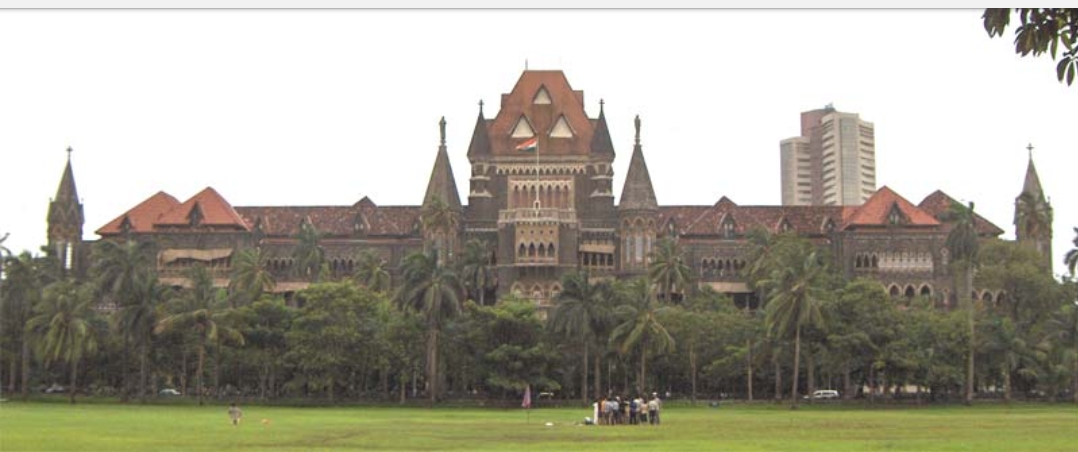
Showing posts with label Bombay high Court. Show all posts

A Woman Has Right To Reside In Her Matrimonial Home or Shared Household, Irrespective of 'whether she has any right, title or interest in the said household or not'- Bombay High Court Order


Bombay High Court

The Bombay High Court recently  (WRIT PETITION NO.10696 OF 2017, Roma Rajesh Tiwari vs Rajesh Dinanath Tiwari) held that  " a woman has right to reside in her matrimonial home or shared household, irrespective of 'whether she has any right, title or interest in the said household or not'."


In the present case, the Respondent has filed a Petition for a decree of nullity on the ground that his marriage with the Petitioner is null and void and, in the alternate, for a decree of divorce. In the said Petition, the present Petitioner-wife appeared and resisted the same vide her written statement, stating that she has been subjected to mental and physical torture by the Respondent, his brother, his brother-in-law and sister-in-law, even during pregnancy, she was constrained to live in constant fear. After the birth of the daughter also, she is not spared from the harassment, ill-treatment and cruelty

She also contended that she was thrown out of the matrimonial home and was compelled to move to her parental home at Colaba on 8th December 2013. Then, she informed the said fact to the Colaba Police Station and also to the Maharashtra State Commission for Women etc. She also conveyed that she want to return back to her matrimonial home and eventually, on 3rd February 2014, accompanied by a woman police, she went to her matrimonial home. However, she was not allowed to enter into the house. Again she made such attempt on 29th March 2014 with the help of Mulund Police. The said attempt was also not successful

However  the petitioner must have some roof over her head and except for her matrimonial home, she cannot have such
roof and, therefore, she sought the relief of interim injunction, restraining the Respondent-husband and his family members from dispossessing her from her matrimonial home.

The Family Court thought it fit to grant the relief of status-quo. It was directed that the Respondent-husband shall not disturb her possession in that house

Then, the Respondent filed an application for vacating the impugned order of the status-quo, contending that the Petitioner was already married and there is no legal dissolution of the said marriage. Hence, her marriage with the Respondent during subsistence of her marriage is null and void ab initio. She is not his legally wedded wife. It was further stated that, the said house belongs to his father and it is his self-acquired property. Hence, she has no right to reside in the house of his father.

The Family Court, after hearing learned counsel for both the parties, vide its impugned order, vacated the status-quo by holding that the said premises belongs to the father of the Respondent.

While giving judgement the Court came to a finding that

" As the necessary question raised for consideration in this Writ Petition is, 'whether the Petitioner is having the right of residence in her matrimonial home?', one has to go through the provisions of the Protection of Women from Domestic Violence Act, 2005. Section 19 of the said Act provides for 'Residence Orders'. The 'Statement of Objects and Reasons' of the said Act is very illustrative as to why this Section 19 was inserted or why this very Act was passed.

Clause 4(iii) of the 'Statement of Objects and Reasons' lays down that,

'This Act seeks to provide for the rights of women to secure housing. It also provides for the right of a woman to reside in her matrimonial home or shared household, whether or not she has any title or rights in such home or household. This right is secured by a residence order, which is passed by the Magistrate'.

Thus, the 'Statement of Objects and Reasons' of the Act makes it clear that, this D.V. Act is enacted to secure the right of a woman to reside in her matrimonial home or shared household, irrespective of the question 'whether she has any right, title or interest in the said household or not'.

Now what is 'shared household' is also defined in Section 2(s) of the D.V. Act, as follows :-
“ 'Shared Household' – 'a household, where a person aggrieved lives or at in any stage has lived in a domestic relationship, either singly or along with the respondent and includes such a household, whether owned or tenanted, either jointly by the aggrieved person and the respondent..... and includes such a household, which may belong to the joint family, of which the respondent is a member, irrespective of whether the respondent or the aggrieved person has any right, title or interest in the shared household'.”

Section 19 of the said D.V. Act provides for 'Residence Orders'. It lays down that,

“When any application under Section 12 is made with a complaint of domestic violence, while disposing of such application, the Magistrate may, on being satisfied that domestic violence has taken place, pass a residence order; (a) restraining the respondent from dispossessing, or, in any other manner, disturbing the possession of the aggrieved person from the shared household, whether or not the respondent has a legal or equitable interest in the shared household'.”

The Court observed that

" In this case, admittedly, till the dispute started between the Petitioner and Respondent, both of them were very much residing in the flat at Mulund and, therefore, as they have lived together in the said flat as a 'couple', as a 'husband and wife', in a domestic relationship, it becomes her 'shared household', as stated in the definition of Section 2(s) of the D.V. Act. In such a situation, whether the said flat belongs to or owned by the Respondent- husband, is totally irrelevant.

As regards the contention of the Respondent that, he has left the said house and gone to reside at New Bombay, which is again a routine defence taken by the husbands in such proceedings, there is nothing on record to show that he has actually shifted his residence Therefore, it is clear that, this ploy is adopted by the Respondent just to deprive the Petitioner from her rightful claim to reside in the 'shared household', which is the Flat at Mulund. This Court cannot fall victim to the tricks or ploys played by the Respondent-husband in such cases."

Based on the above findings and observations Justice DR. SHALINI PHANSALKAR-JOSHI held that

" Accordingly, the Writ Petition is allowed. The impugned order passed by the Trial Court on 30th May 2017  of vacating the order of status-quo, is set aside. The earlier order of status-quo passed by the Family Court, Mumbai, on 29th September 2014  is restored. "

.


Share:

" A married woman cannot by relying on her husband’s caste claim entitlement to contest election for the seat reserved for a Scheduled Caste candidate " - Bombay High Court Order

Bombay High Court

The Bombay High Court recently (WRIT PETITION NO. 9528 OF 2017 Mrs. Anuradha Sudhakar Katkar Vs Divisional Caste Scrutiny Committee, Solapur, Ambedkar Bhawan Satrasta, Solapur & Ors.) held that " a married woman cannot by relying on her husband’s caste claim entitlement to contest election for the seat reserved for a Scheduled Caste candidate." 

In the present case the Petitioner has been elected as a candidate in the election of the Solapur Municipal Corporation. The Petitioner had contested the election as candidate of  Congress party for the seat available for OBC category. The Petitioner at the time of filling election form, submitted the documents in support of her caste case claiming as “Tambat” OBC on the basis of her husband's caste and not her father's caste. The Petitioner's election form was accordingly accepted. The Petitioner upon submitting her caste claim as Tambat OBC had been elected as Corporator of Solapur Municipal Corporation in the election conducted in February 2017.

The Divisional Caste Scrutiny Committee had thereafter directed the Petitioner to submit the caste of her father's side and accordingly, the Petitioner had submitted the documents of her father's side which supported the caste claim of “Lohar NT”.

On 10 March 2017 the State Election Commission informed the Secretary of   Town Planning Department, Mantralaya that the orders regarding cancellation of election of a candidate should be passed   with retrospective effect.

However, due to non-availability of members of the scrutiny committee, no decision regarding the caste claim of the petitioner was taken. Consequently, the said writ petition was filed. 

While deciding the case the court came to a finding that

"the issue of whether a woman by virtue of her marriage can rely upon her husband’s caste and claim entitlement to the benefit of reservation as a Scheduled Castes and/or be entitled to contest the election for the seat reserved for a Scheduled Castes candidate has been answered by the Supreme Court. 

The Supreme Court in  Meera Kanwaria Vs.
Sunita & Ors(2006(1) SCC 344) relying upon the judgment of the Supreme Court in Mrs. Valsamma Paul v. Cochin University and Others (1996)3 SCC 545 after reviewing the entire law on the subject in paragraph 24, held thus:­
“It is, therefore, beyond any doubt or dispute that a person who is a high caste Hindu and not subjected to any social or educational or backwardness in his life, by reason of marriage alone cannot ipso facto become a member of Scheduled Caste or Scheduled Tribe. In the absence of any strict proof he cannot be allowed to defeat   the very provisions  made by the reserving certain seats for disadvantaged people.”

Thus observed

" It is thus clear that a married woman cannot  by relying on her husband’s caste claim entitlement to contest election for the seat reserved for a Scheduled Caste candidate."

And held that

" the Petitioner has been wrongfully elected as Corporator based on the caste case from her husband's side and the Petition deserves to be dismissed, in view of the law laid down by the Hon'ble Supreme Court in Meera Kanwaria (supra) "


Share:

"A person repeatedly or constantly follows or watches or contacts a child with sexual intent can be said to have committed an offence under Section 11 of the POCSO Act" Bombay HC Order

The Bombay High Court on 27th September 2017 has ruled that

"If a person with sexual intent repeatedly or constantly follows or watches or contacts a child either directly or through other means, then he can be said to have committed an offence defined under Section 11 of the POCSO Act"

Bombay High Court
Bombay High Court


In the instant case( CRIMINAL WRIT PETITION NO.1947 OF 2017 MANJU TEJBAL VISHWAKARMA AND ANR. V/s.
THE UNION TERRITORY OF DAMAN & DIU) the petitioners filed a writ petition for quashing the proceedings in Special Case No.20 of 2016 pending against them on the file of the learned Special Judge under Protection of Children from Sexual Offences Act, at Daman

The learned advocate for the Petitioner argued  that  the  FIR  itself  is hearsay  and cannot constitute as admissible evidence for framing Charge against the accused persons i.e. petitioners.

The learned advocate for the petitioners, further argued that the allegation against petitioner no.2 / accused no.2  Valji Vadher are as vague as it is only averred that he had bad eye on the victim girl and therefore, this vague statement cannot make out an offence under Section 11 of the POCSO Act.  At any rate, such statement cannot be considered as evidence sufficient to frame Charge for the offence punishable under Section 11 and made punishable under Section 12 of the POCSO Act.

In giving judgement the Court find it appropriate to produce provisions Section 11 of the POCSO Act, which reads thus :

11. Sexual harassment : A person is said to commit sexual harassment upon a child when such person with sexual intent­
(i)utters any word or makes any sound, or makes any gesture or exhibits any object or part of body with the intention that such word or sound shall be heard, or such gesture or object or part of body shall be seen by the child; or

(ii)  makes a child exhibit his body or any part of his body so as it is seen by such person or any other person; or

(iii)  shows any  object to a child  in any form or media for pornographic purposes; or

(iv) repeatedly or constantly follows or watches or contacts a child either directly or through electronic, digital or any other means; or

(v) threatens to use, in any form of media, a real or fabricated depiction through electronic,film or digital or any other mode, of any part of the body of the child or the involvement of the child in a sexual act; or

(vi) entices  a child  for pornographic purposes or gives gratification therefor.

The Court held that

"In context of the instant case, it needs to be mentioned that if a person with sexual intent repeatedly or constantly follows or watches or contacts a child either directly or through other means, then he can be said to have committed an offence defined under Section 11 of the POCSO Act.  The question whether the act was with sexual intent is a question of fact which needs to be adjudicated on appreciation of evidence   adduced by the prosecution."

The Court also held that

"In her statement recorded under Section 161 of the Cr.P.C., she has stated that petitioner no.2 Valji Vadher always used to see her with bad intention.  Watching a female child with sexual intent comes under the mischief covered  by Section 11  of the  POCSO  Act. Therefore, it cannot be said that there are no sufficient grounds to proceed against petitioner no.2 Valji Vadher for the offence as defined by Section 11 and made punishable under Section 12 of the POCSO Act."

The Court finds that

In the instant case, material on record shows that there are no averments that petitioner no.1, who is mother of the victim female child, has done any act against the victim, who is her daughter, with any sexual intent, and therefore, Section 11 of the POCSO Act made punishable under Section 12 thereof is infact not invoked by the prosecution against petitioner no.1

In the result, the Court held that proceedings in Special Case No.20 of 2016 pending on the file of the learned Special Judge under the POCSO Act, cannot be quashed.


Share:

Multiple Khoj

Search This Blog

Popular Posts

Labels

Like Our Facebook Page

Recent Posts